
After not having allergies my whole life, I recently had an anaphylactic episode. The experience of going through it and the response from others after talking about it made me want to leave this here because while some know what to do when buzz words are mentioned, understanding of the actual experience and what it actually looks like seems less certain.
I can only share my experience and the information I’ve learned from credible medical sources in my search to understand what actually happened. Every experience is different, hopefully this helps someone else recognize what it could look like and what to do if they see it. This is not a short read, prepare yourself.

A bench on a trail at the NYBG on the day of my anaphylactic episode
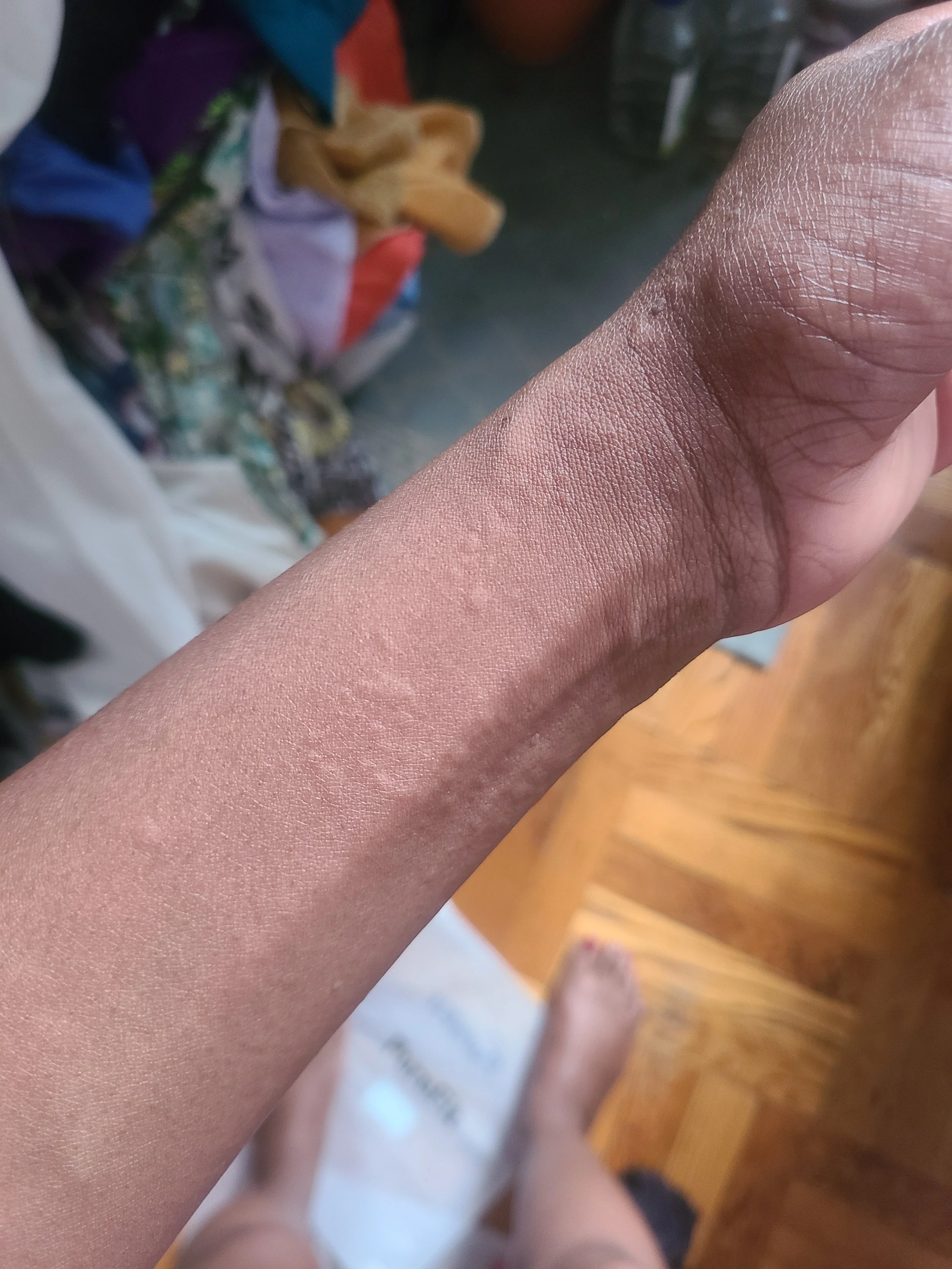
My reaction started after mosquitos had a field day on my skin at a garden around 3pm. I’ve been bitten by mosquitos before with no adverse reaction, so I attributed the itchiness to the bites even though usually there’s just the one raised bump from the bite and this time there were large clusters of raised, itchy, hot bumps around the bites and in places where there were no bites. Now I know, these are hives - a red flag signaling an immune response.
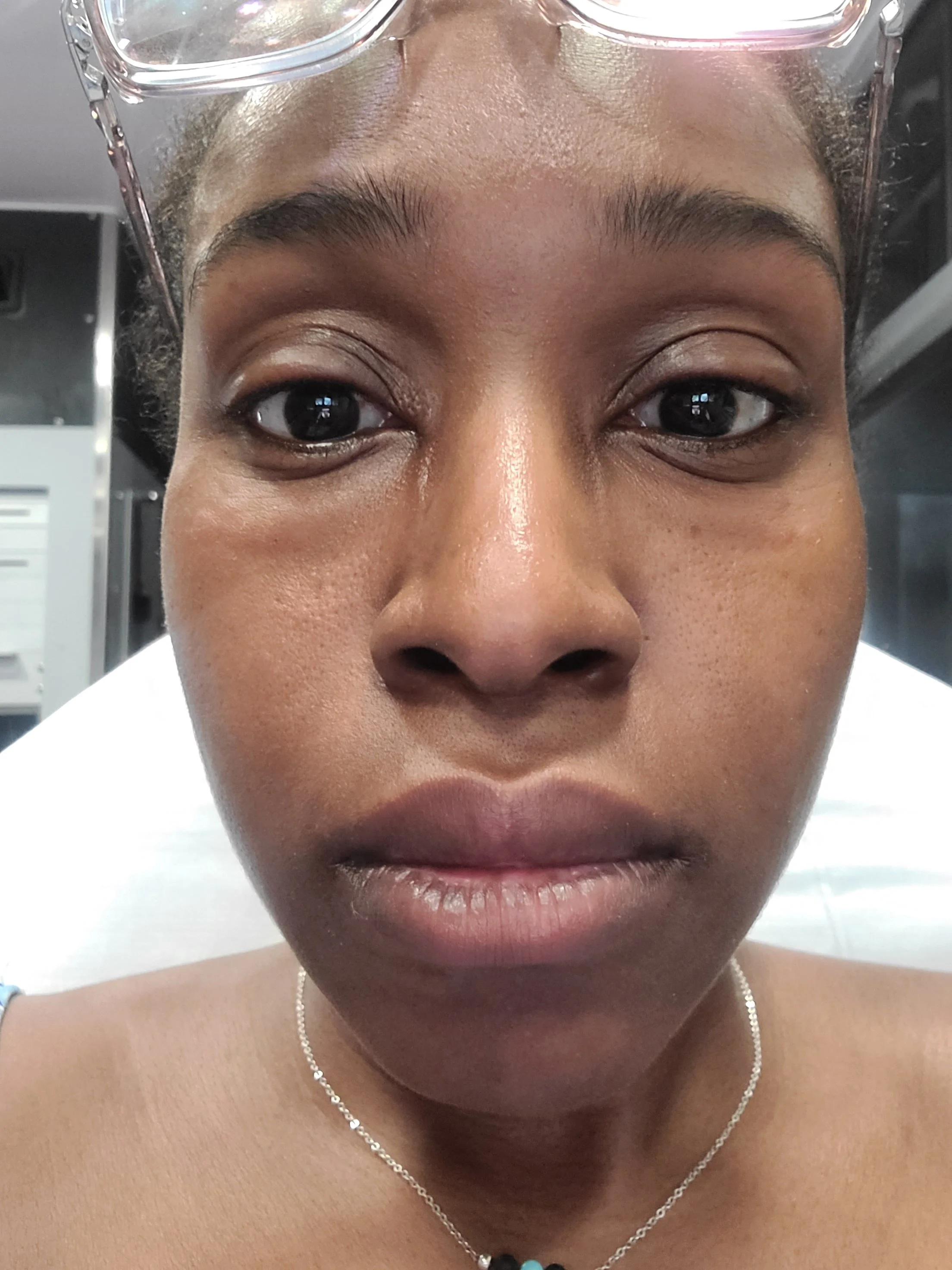
By the time I got home around 7pm, the hives had spread into wider clusters over about 30% of my body. Now I know that when hives become generalized all over the body instead of localized in one or two spots this is a signal that an allergic reaction is becoming severe. I still thought this was somehow remnants of the mosquitos and it would work its way out of my system so I took a nap in hopes that when I woke up, it’d be over. When I woke up at 1am, these hot, intensely itchy hives covered about 50% of my body and my lips had swollen up. The swelling is when I realized this is some kind of allergic reaction.
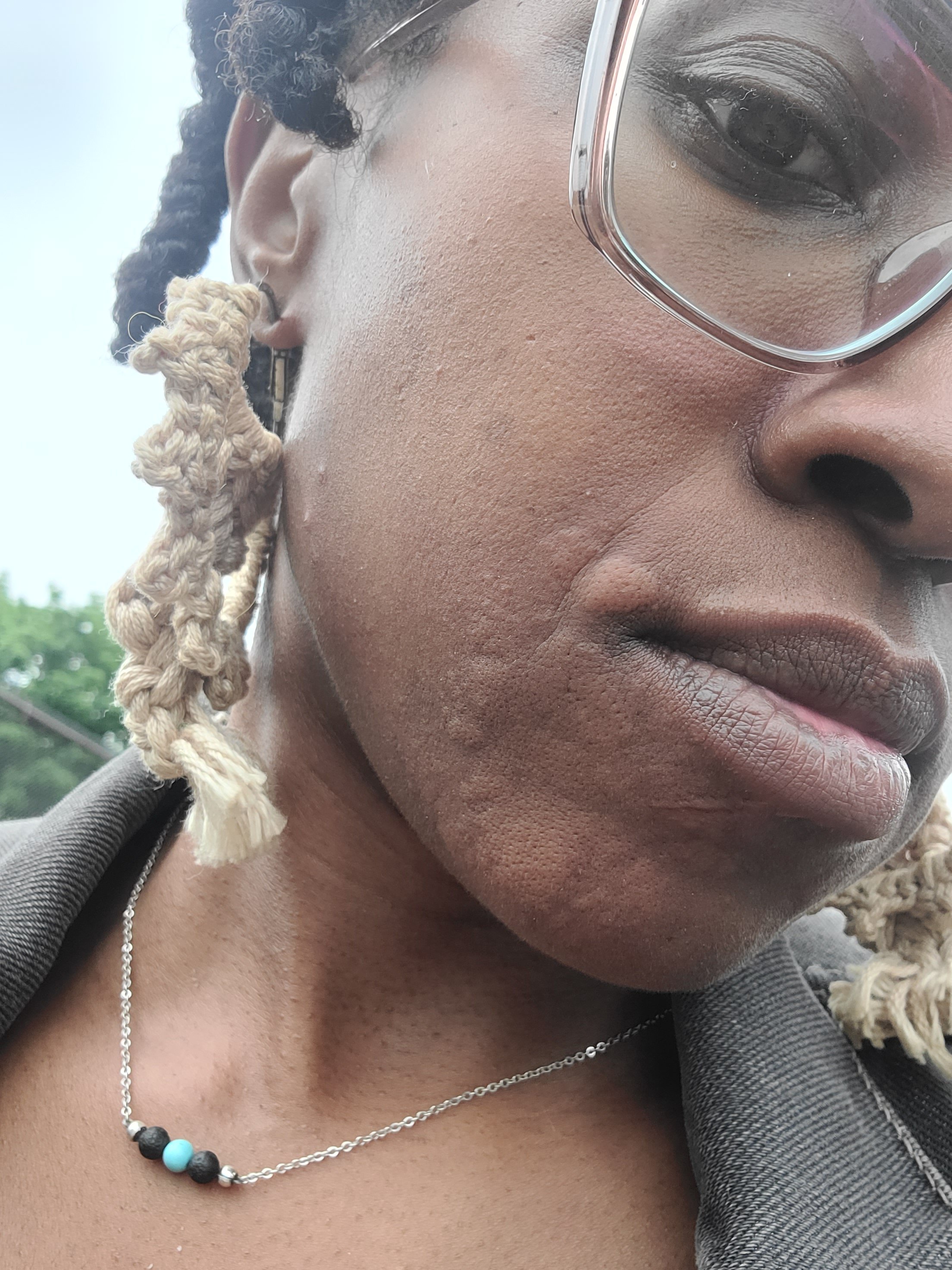
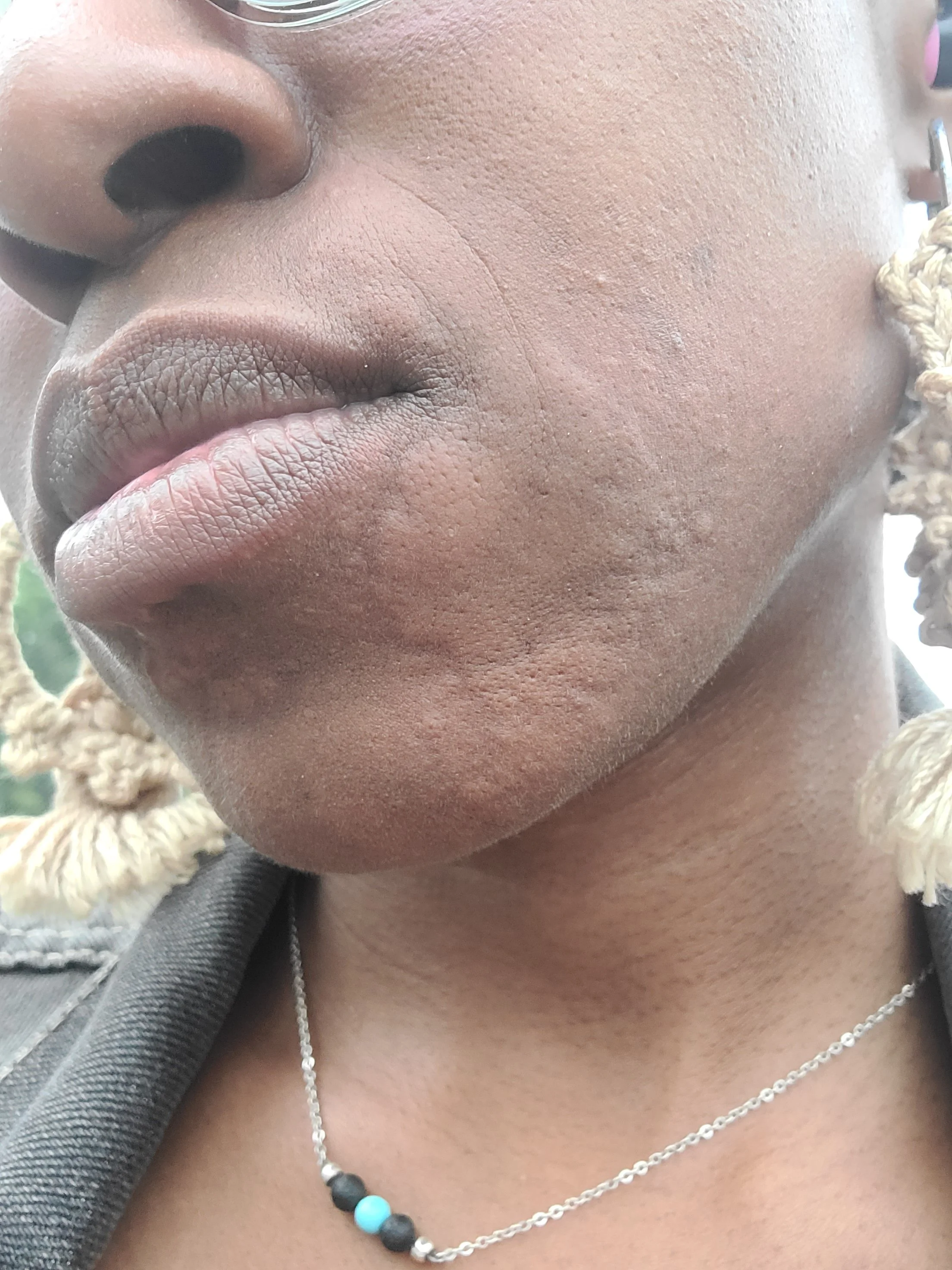
With stores closed and having no allergy medicine in my cabinet, I took what I had - which was Advil with acetaminophen and ibuprofen. I showered, moisturized with vaseline, and put ice on my hands, feet, and face and tried to get back to sleep, vowing to go to the deli for Benadryl first thing in the morning. When I woke up around 7:30am the hives had spread even further, my eyelids and cheeks had also swelled up, my hands and feet were intensely itchy and swollen, and it felt like I was trying to swallow a lump. I texted my mom, and my girl group chat (consisting of a nurse and a woman living with chronic autoimmune disease). I told them all what I was experiencing and sent pics. Mom said just wait for the Benadryl to kick in. Girl group said take the Benadryl but also, call 911 cuz it sounds like anaphylaxis is trying to set in and my throat might devolve faster than Benadryl can work.
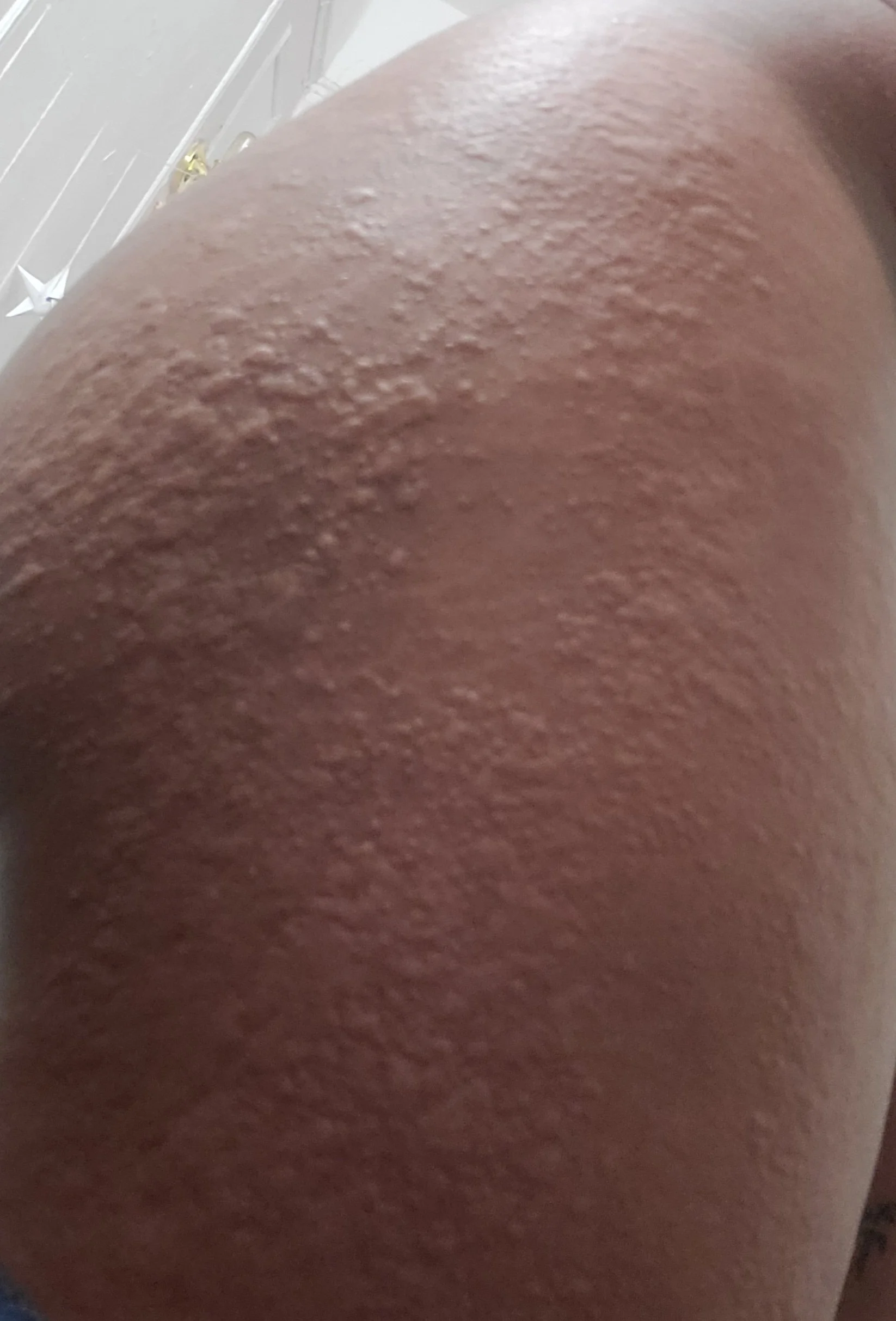
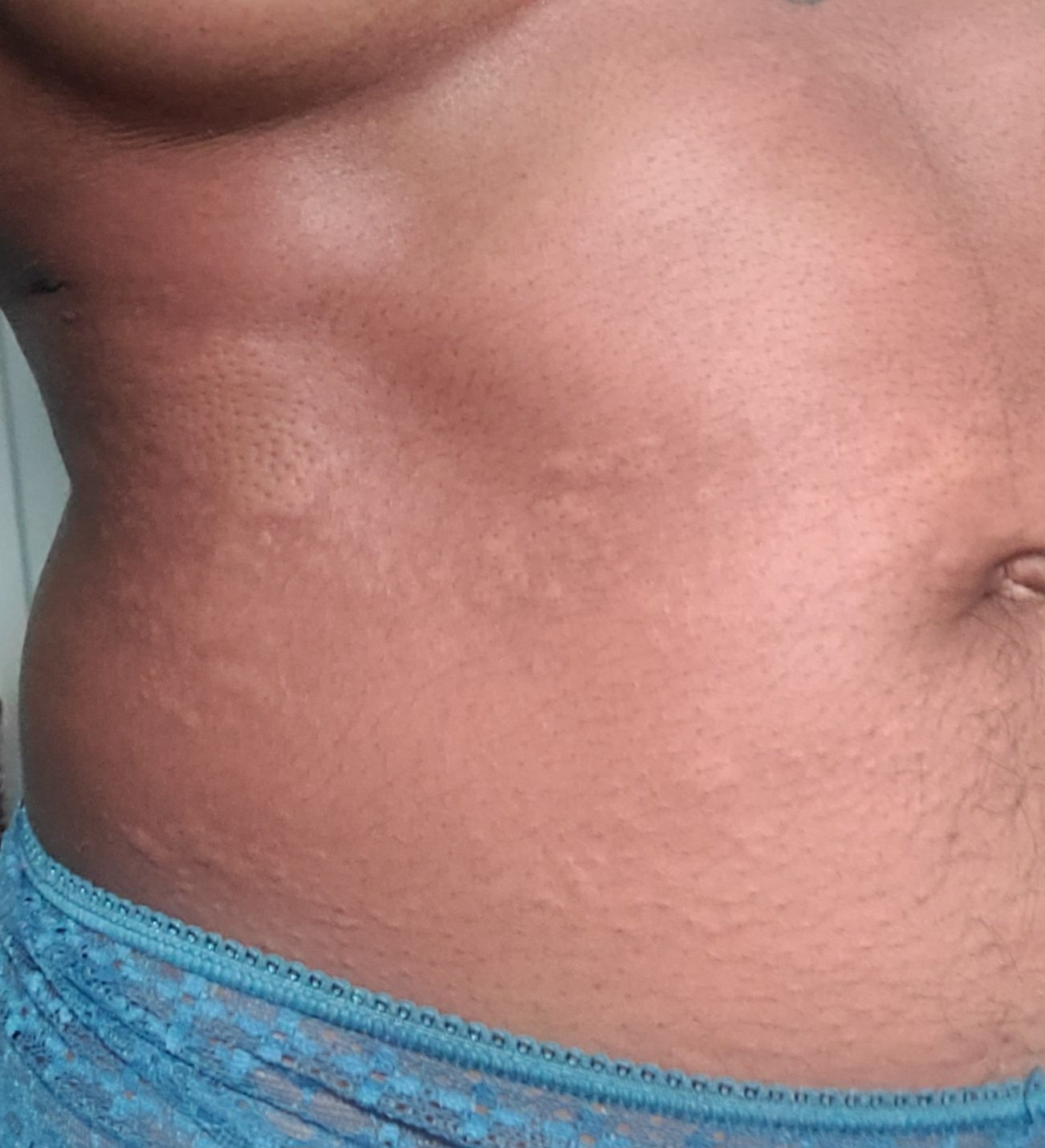
I went to the deli at 8am and asked for as much Benadryl as they could sell me. They gave me 6 doses, I went home and immediately took one and contemplated whether or not I should wait for it to work, or do something else as this lump was getting more and more uncomfortable to swallow around. After all, I live alone and if I start feeling worse, there is no one to help me in my apartment.
I googled “can I wait for Benadryl to kick in if I feel like I’m swallowing a lump and have hives”? The Mayo Clinic sources that came up said no, call 911. I called 911 and could barely speak. My voice was hoarse and raspy and barely an audible whisper. The 911 tech said it sounds like I’m having trouble breathing, she got my address and dispatched EMS. After hearing my voice on the phone I was convinced that lump feeling in my throat is what medical sources mean when they say “difficulty swallowing”. Now I know, that’s what my throat closing feels like.
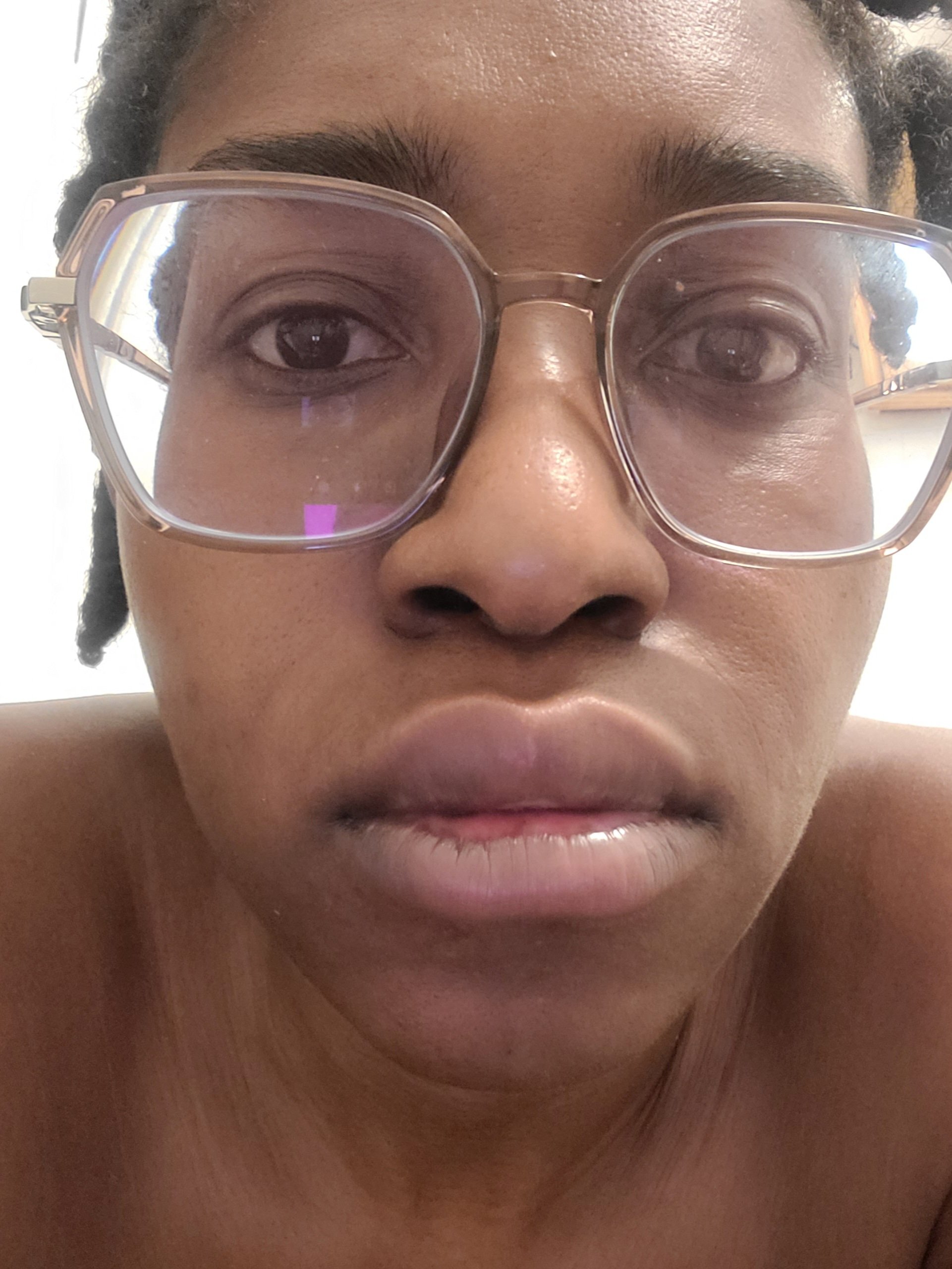
My lips swelling up
15 minutes. That’s all the time it took. From speaking clearly at the deli to my throat closing so much I could barely speak. 15 minutes. No pain. No dizziness. No lightheadedness. Just a really hard lump to swallow and breathing was slightly shallower.
EMS arrived around 8:30am and had me sit in the ambulance while they did blood pressure and temperature (both were actually pretty elevated from my usual numbers). They listened to my breathing and heart and determined it all sounded normal, they noted the extensive swelling and hives and raspy hoarse voice. We waited for dispatch to tell us which hospital to go to. They kept me talking, my itchiness started going away, the swelling started going down, the lump in my throat wasn’t getting worse, my raspy voice was becoming more audible. 9am we drove to the hospital. It took 1 full hour between taking Benadryl and seeing it starting to work.
At the hospital, an ER doctor spoke to the EMTs and spoke to me. I was admitted and vitals taken. They prescribed me corticosteroids (Prednisone, Pepcid) and Benadryl and sent me home after about an hour. The lump in my throat finally fully went away once I started the steroids. Now I know, they didn’t prescribe me an EpiPen because according to their diagnoses, only one system reacted - the skin, and anaphylaxis is a reaction of 2 or more systems. In a retrospective review of the visit summary, the documented diagnosis of “moderate allergic reaction” did not account for my cardiovascular system’s huge spike in blood pressure up to 130/82 from its usual 107/73 - they didn’t know my usual numbers. They also did not count my respiratory system’s throat closing from muscle spasms as it had started improving by the time I got to the ER.
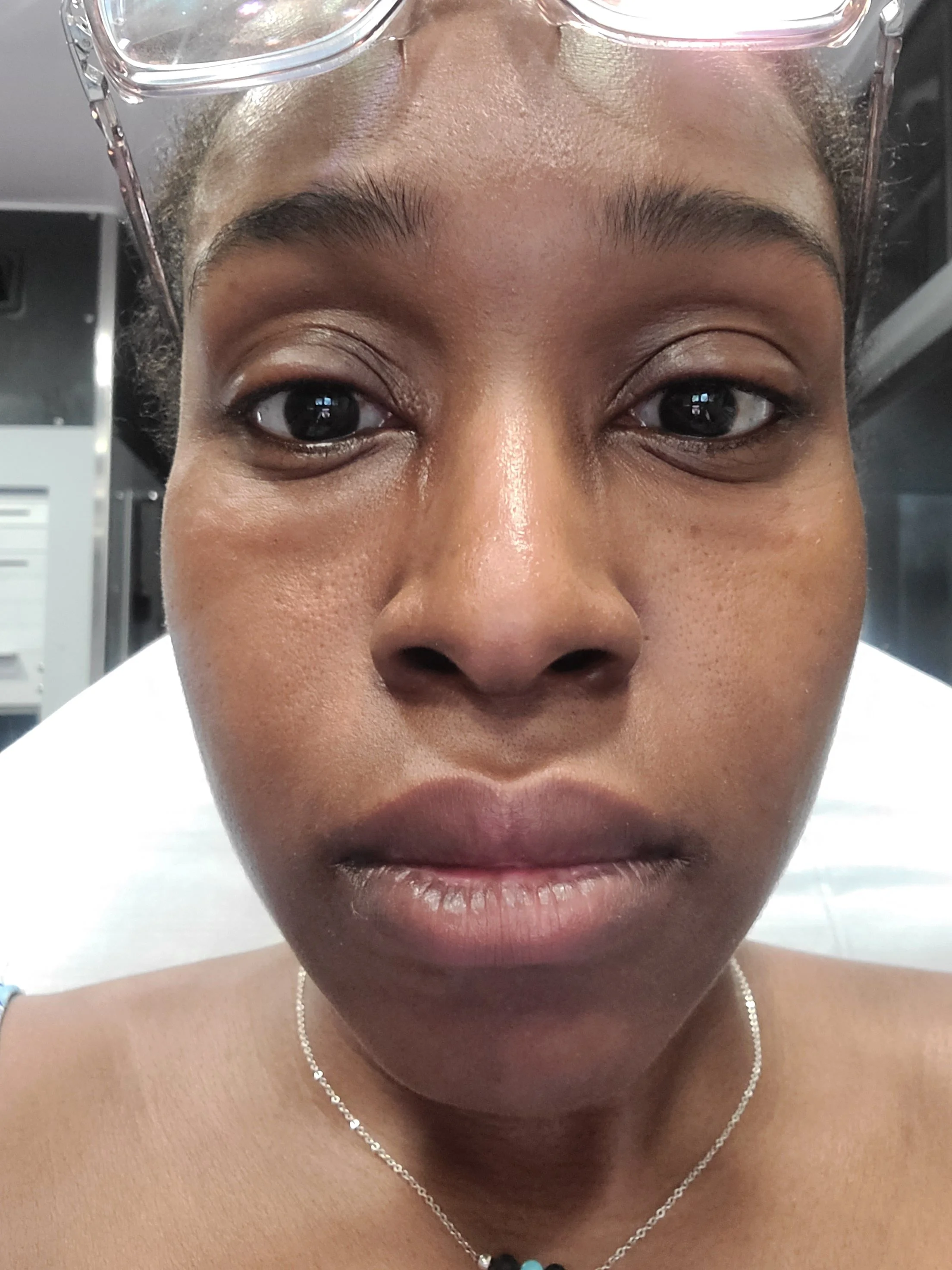
Swelling (angioedema) in my face while waiting in the ambulance
I got the meds from my pharmacy and took the first doses of a 4-day course. Hours later that evening, I had painful gastrointestinal cramping. I thought it was a side effect from the meds. I drank some tea and went to bed hoping to sleep it off. Now I know, this was a second wave of symptoms known as biphasic anaphylaxis. The corticosteroids and histamines prescribed by the ER were given precisely to mitigate this secondary reaction but my system stubbornly reacted anyway. By the time I awoke in the morning, it was thankfully over.
Over the next few days of taking the course of steroids, waves of itching and lightheadedness came and went. On day 3 of the course, I taught my first Zumba class since the episode and felt slight chest tightness. So I did what I always tell my clients to do, and I listened to my body. I slowed down, modified my movements, and did more verbal cueing. The tightness was very short lived but I was on high alert. When it came back before bedtime, I resolved to go to my primary care provider (PCP) for an EpiPen or inhaler prescription the next morning.
The next day my telehealth appointment ended with the doctor on call telling me I need an in-person appointment, so I went back to the ER for my EpiPen instead. After 8hrs of tests, my heart is officially fine (they had to rule out heart issues as a cause of my chest tightness), I have my EpiPen, and I’ll be going to my PCP and an Allergy Specialist throughout this month.
If you made it to the end of that harrowing tale, I’m officially presenting you with flowers, haha! I share all this because as a fitness professional and children’s programming instructor, I knew the buzz words, “hives”, “difficulty swallowing”... from my continued CPR certification I am familiar with the term “anaphylaxis” and how to help someone else who is going through it. However, all of that education did nothing when I had to recognize it for myself in the real world. I’m so conditioned to stay calm and rational that the dire emergency of the situation didn’t truly strike me until it had progressed to me hearing my struggling voice on the phone with 911.
“The swelling is when I realized this is some kind of allergic reaction. ”
When I share my experience and receive push back, it is surrounding whether or not I was actually experiencing anaphylaxis and whether or not I overreacted. I’m going to address these thoughts for anyone who might also question whether or not to act, or how extremely to act because of similar concerns. Medically speaking when I called 911, I was in an anaphylactic episode. Three systems were reacting severely, albeit a non-typical reaction of hypertension vs. hypotension from my cardiovascular system and a typical severe reaction from my skin/mucus system. My throat was also closing indicating respiratory system involvement. It’s irrelevant whether it was closing due to respiratory system driven airway tissue swelling vs. nervous system driven muscle spasms closing the vocal chords. A throat closing is still a throat closing. If I had an EpiPen on hand and used it, it would have been warranted. I would not have done any harm to myself in using it and it would have re-opened my throat regardless of which system closed it. Taking Benadryl absolutely helped me, but it was not enough to fully re-open my throat by itself. Calling 911 and getting secondary medications from the ER were absolutely critical for me, especially since those meds are what fully opened my throat and minimized the second wave of GI system symptoms that came later that night.
I say all this to assure anyone who is ever in the situation where this is happening to them or around them and has doubts about what to do. USE THE EPIPEN AND CALL 911 if there even appears to be any combination of skin issues, breathing/swallowing issues, gastrointestinal issues, and/or heart issues in an allergic response. Benadryl might temporarily help some symptoms but it won’t quickly open an airway, and biphasic anaphylaxis is a well documented effect. Go to the ER and get checked out, even if you’re feeling better.
After this eye opening experience, I compiled an easy read below using all the resources that helped me understand what happened. Hopefully it helps you understand what anaphylaxis is and how it is managed, and I hope it helps you feel more confident to act if you ever need to.
What is Anaphylaxis?
A severe, potentially life-threatening allergic reaction.[1] Symptoms involve multiple body systems including the skin, heart, stomach and airways.[4]
Signs and symptoms
If you experience allergy symptoms involving two or more body organs (skin, respiratory system, digestive system, heart[, etc.]), this is anaphylaxis.[4]
“Skin/mucous system
Flushed skin, itching, hives, swelling, rash, goosebumps
itching of lips, tongue, and palate; swelling of lips, tongue, and uvula
Itching, redness, and swelling around the eyes, red eyes, tearing
Respiratory System
Throat: itching and tightness in the throat, difficulty swallowing, hoarseness and impairment in voice quality, dry staccato cough, stridor (high-pitched wheezing sound), itching in the ear canal
Lungs: shortness of breath, difficult or labored breathing, chest tightness, deep cough and wheezing/bronchospasm (decreased peak expiratory flow)
Nose: itching, congestion, runny nose, sneezing
Cardiovascular System
Abnormally low blood pressure
Feeling of faintness/dizziness, passing out, altered mental status
Chest pain, abnormal or irregular heart beat
Gastrointestinal System
Nausea, crampy abdominal pain, vomiting (stringy mucus), diarrhea
Other
Uterine contractions in women, an aura of doom.”[3]
Timing of symptoms
Usually, symptoms start within five to 30 minutes of coming into contact with the allergen…but symptoms can sometimes start more than an hour later.[2] Symptoms normally peak within a half-hour of exposure, but they can last for several hours.[4] “Some healthcare providers break the stages of anaphylaxis into four categories:
Stage one: Mild anaphylaxis is the first stage and can cause symptoms like skin rash or redness, itching or hives.
Stage two: Moderate anaphylaxis happens when a person has more widespread and extensive symptoms like skin rash and hives that are spreading or mild swelling in their lips or tongue.
Stage three: Severe anaphylaxis happens next and involves a person displaying signs of difficulty breathing, extensive swelling, weak pulse or dizziness. A person in stage three anaphylaxis is experiencing a condition called anaphylactic shock.
Stage four: Life-threatening anaphylaxis is the last stage and involves a person losing consciousness, being unable to breathe and having inadequate blood flow to vital organs. A person in this stage needs immediate medical attention to avoid death.
Biphasic anaphylaxis is when you have a second wave of symptoms after the first symptoms go away. This second wave can be hours or even days after the first wave.”[2]
What to do if someone is experiencing anaphylaxis
With an anaphylactic reaction, you will have allergy symptoms involving two or more body systems at the same time. You may have all of the symptoms at the same time, and they gradually become more severe.[4] If someone is experiencing anaphylaxis:
Deliver an epinephrine shot (an EpiPen). Even if symptoms improve after the injection, you still need to go to an emergency room to make sure symptoms don't recur, even without more exposure to the allergen.[1]
Call 911 if you do not have epinephrine, or go to the hospital, emergency department or urgent care clinic right away for treatment.[4] ** Benadryl alone is not enough to stop anaphylaxis.** “Antihistamine agents are considered second-line treatment for anaphylaxis, given their slow onset of action … unlike epinephrine, antihistamines will not effectively treat cardiovascular and respiratory symptoms.”[6]
Don't give a person who has anaphylaxis anything to drink.[5]
Lay the person flat, unless they’re having trouble breathing. In that case, help them sit up to make it easier to breathe.[2]
How the medications work
->Epinephrine [self administered, or given at the ER] stops the immune response to your allergen. It relaxes the muscles in your airways, and also increases your heart rate and blood pressure.[6]
->Antihistamines [self administered, or from the ER] treat minor anaphylactic symptoms - such as hives[, itching, edema, or skin/mucous conditions - and] take about 30 or more minutes to take effect.[4]
->Corticosteroids [given/prescribed at the ER for a course of days to suppress the immune system] reduce the length of anaphylaxis or prevent biphasic anaphylaxis.[7]
->Bronchodilators [given/prescribed at the ER] reduce asthma-like symptoms (moderate wheezing or cough).[7]
Sources
[1] The Mayo Clinic https://www.mayoclinic.org/diseases-conditions/anaphylaxis/symptoms-causes/syc-20351468
[2] The Cleveland Clinic
https://my.clevelandclinic.org/health/diseases/8619-anaphylaxis
[3] The Journal of Allergy and Clinical Immunology
https://www.jacionline.org/article/S0091-6749(05)00088-6/fulltext
[4] The Allergy & Asthma Network
https://allergyasthmanetwork.org/anaphylaxis/
[5] The Mayo Clinic - First Aid
https://www.mayoclinic.org/first-aid/first-aid-anaphylaxis/basics/art-20056608
[6] The Journal of Allergy and Clinical Immunology - Anaphylaxis - a 2020 practice parameter update https://www.jacionline.org/article/S0091-6749(20)30105-6/fulltext
[7] The American CPR Care Association https://cprcare.com/blog/anaphylaxis-causes-symptoms-diagnosis-treatment/